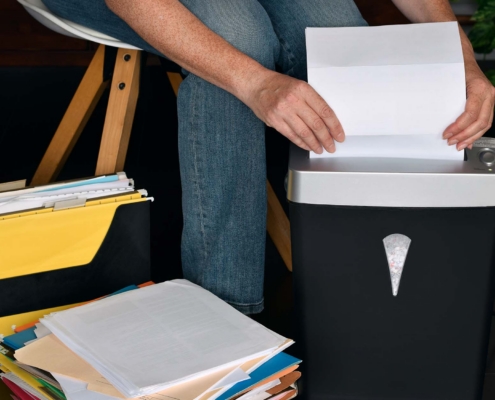
The physical document exposure during an employee departure falls into a few consistent categories, each carrying its own handling requirement.
The employee’s own personnel file – Whether stored centrally in HR or distributed across a department, the personnel file contains performance reviews, compensation records, disciplinary documentation, and sometimes medical accommodation requests. During a departure, these records need to be confirmed as secured and accounted for, not left in an ambiguous state while the transition happens around them.
Records the departing employee was responsible for – Employees in finance, HR, legal, healthcare, and client-facing roles often act as custodians of records beyond their own file. Regulated industries have compliance frameworks governing how those records transfer when the responsible person leaves. Without a defined process, those records become unaccounted for during the transition.
Documents in shared workspaces – Desks, filing cabinets, and print queues are common repositories for documents that haven’t been formally routed anywhere. When departing employees clear their workspace, what happens to those documents depends entirely on whether anyone made that question part of the process.